A stark warning to the UN
The Trump administration's lead official overseeing Gaza policy delivered a blunt message to the United Nations Security Council last week, warning that the collapse of the fragile ceasefire process underway in the territory would represent what he called a point of no return. Nickolay Mladenov, who serves as the high representative for Gaza under the newly created Board of Peace, made the remarks as Israeli strikes continued despite a ceasefire framework announced by President Trump at the end of July.
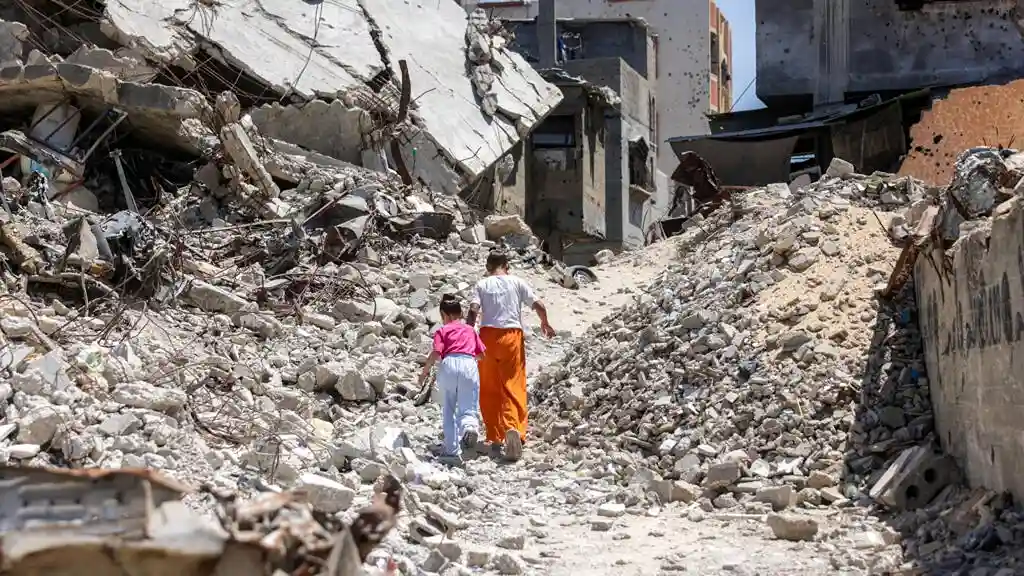
The warning came against a backdrop of deteriorating conditions on the ground. Just days earlier, at least ten people were killed in two separate strikes in central Gaza, according to local hospitals and the Palestinian Red Crescent, even as US negotiators had reportedly asked Israeli officials to scale back military operations while ceasefire talks continued.
The failure of the Gaza ceasefire process would be a point of no return, the lead US official for the enclave warned the United Nations Security Council.
A peace plan stuck in limbo
Trump unveiled a fifteen-point peace plan for Gaza at the end of July, laying out a sequenced set of steps meant to halt regular Israeli military operations, disarm Hamas, and ultimately lead to a full withdrawal of Israeli forces from the territory. Israeli Prime Minister Benjamin Netanyahu publicly rejected key elements of that plan after more than a week of silence, insisting that Israeli troops would not withdraw until Hamas had been completely disarmed.
Hamas, for its part, has said it agreed in principle to a disarmament process but has warned that it will only move forward if Israel fully upholds its own obligations under the earlier ceasefire agreement reached in October. That standoff has left the plan effectively frozen, with each side pointing to the other as the obstacle to progress.
Regional mediators step up pressure
The foreign ministers of eight countries, including Jordan, Egypt, Qatar, Saudi Arabia and Turkey, issued a joint statement condemning what they described as Israel's rejection of the ceasefire framework, arguing that Israel now bears primary responsibility for the plan's collapse. Trump's son-in-law and senior adviser Jared Kushner has since held a series of meetings with regional leaders, including Netanyahu, in an effort to bridge the remaining gaps and keep the process alive.
An official with the Board of Peace said the goal of those meetings was to concretize the next practical steps of the ceasefire, though no formal breakthrough has been announced. Humanitarian officials say the continued fighting has taken a severe toll on civilians, with health officials in Gaza reporting well over a thousand deaths since the October ceasefire first took effect.
Where things stand
With diplomatic efforts continuing on multiple fronts and no clear resolution in sight, officials involved in the talks say the coming weeks will likely determine whether the ceasefire framework can be salvaged or whether the conflict enters a renewed and more dangerous phase. For now, both the scale of the humanitarian need and the political stakes for Washington's broader Middle East strategy continue to rise.
Humanitarian organizations operating in Gaza say the practical toll of the stalled ceasefire extends well beyond the immediate casualty figures, with aid delivery routes remaining unpredictable and reconstruction efforts largely paused pending greater clarity on the security situation. Aid officials have repeatedly asked both Israeli and Hamas representatives for firmer commitments on humanitarian access corridors, arguing that even incremental progress on that front could help rebuild some trust between the parties while the broader political framework remains unresolved. Diplomats involved in the talks say they are increasingly focused on smaller, verifiable confidence-building steps, arguing that after so many failed attempts at a comprehensive breakthrough, incremental progress may now offer the more realistic path forward, even if it falls well short of the full ceasefire framework originally envisioned in Trump's plan.