Wheel-free robotaxis hit the streets
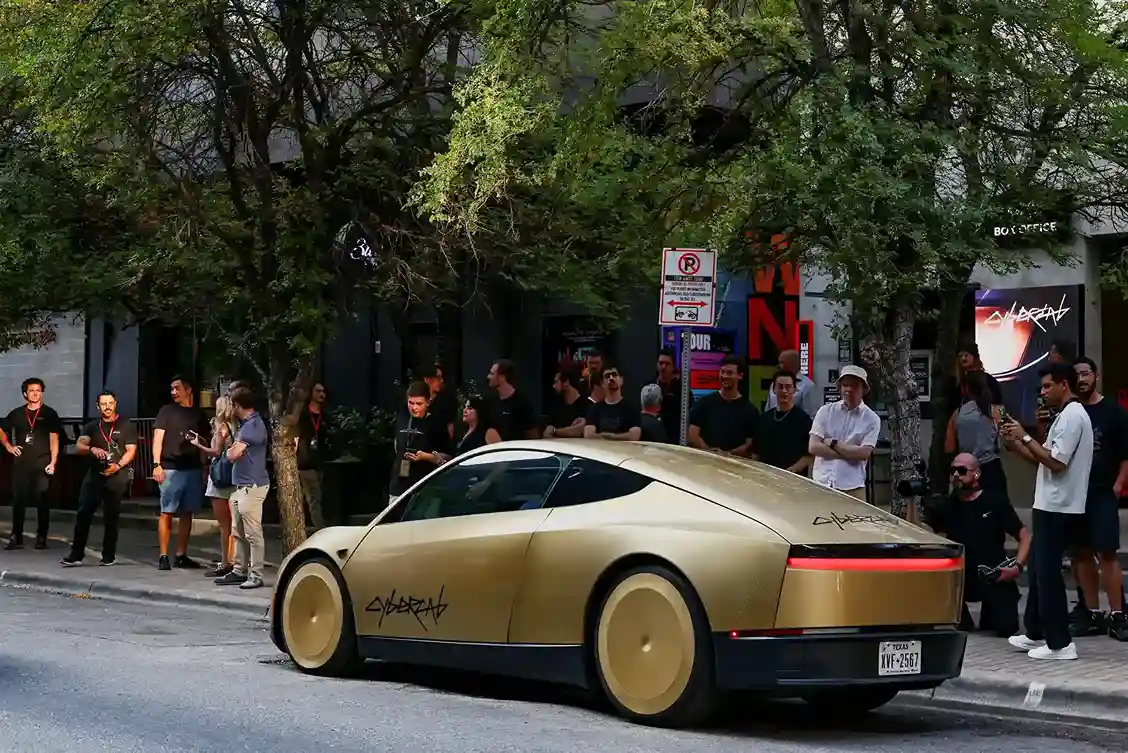
Tesla began operating its long-anticipated Cybercab robotaxis on public streets in Austin this week, marking the company's first large-scale deployment of a vehicle built from the ground up without a steering wheel or pedals, designed to operate entirely through its autonomous driving software. The launch represents a significant milestone for a company that has spent years promising fully autonomous vehicles while facing repeated delays and skepticism from safety regulators and some industry analysts.
Early riders in Austin have shared largely positive impressions of the smooth, cabin-forward design and the novelty of a vehicle with no traditional driver controls at all, a stark visual departure from competitor robotaxi services that have generally retained manual controls as a backup option. Tesla has framed the wheel-free design as both a cost-saving manufacturing decision and a statement of confidence in the maturity of its autonomous driving technology.
A safety probe within days
That confidence was quickly tested when federal regulators opened a safety investigation into the Cybercab program just days after the vehicles began operating on public roads, following reports of several incidents involving erratic driving behavior and at least one collision with a stationary object. The National Highway Traffic Safety Administration has not detailed the full scope of the investigation but confirmed it is examining whether the vehicles are performing safely under real-world conditions in the specific operating environment Tesla has chosen for the initial rollout.
Tesla has defended the technology's safety record, pointing to internal data it says shows a lower incident rate per mile than the average human driver, though independent safety researchers note that Tesla's methodology for calculating those comparisons has previously been criticized for excluding certain categories of incidents or relying on data that is difficult for outside researchers to independently verify.
A pattern of scrutiny for autonomous vehicles
The investigation adds Tesla to a growing list of autonomous vehicle operators that have faced regulatory scrutiny after early deployment incidents, a pattern that has repeated across the industry as companies race to be first to market with driverless technology in new cities. Regulators have generally allowed pilot programs to continue during investigations unless incidents suggest an immediate and serious safety risk, a standard that will likely determine whether Tesla's Austin rollout continues uninterrupted or faces a temporary pause while the investigation proceeds.
Consumer safety advocates have called for more rigorous, standardized testing requirements before wheel-free vehicles are permitted to operate at scale, arguing that removing manual controls entirely eliminates a potential safety fallback that other robotaxi operators have retained. Tesla has argued that its remote monitoring and intervention capabilities provide an equivalent safety layer, though the company has not disclosed detailed statistics on how frequently remote operators have needed to intervene in Cybercab operations since the Austin launch began.
Austin's role as a testing ground
Austin has emerged as one of the most closely watched cities in the country for autonomous vehicle deployment, hosting pilot programs from multiple competing companies eager to prove their technology in a mid-sized urban environment with fewer regulatory hurdles than some coastal cities. Local officials have generally welcomed the investment and attention that comes with hosting cutting-edge autonomous vehicle pilots, though City Council members have said they are monitoring the newly opened federal investigation closely and could revisit local permitting requirements depending on its findings.
Ride-hailing customers in the city have had mixed reactions, with some early adopters enthusiastic about experiencing genuinely driverless technology firsthand and others expressing hesitation about riding in a vehicle with no manual override available to a human passenger in an emergency. Tesla says it plans to expand the Cybercab program to additional cities later this year regardless of the ongoing investigation, though the company has acknowledged that regulatory outcomes in Austin could influence the pace of that broader rollout.