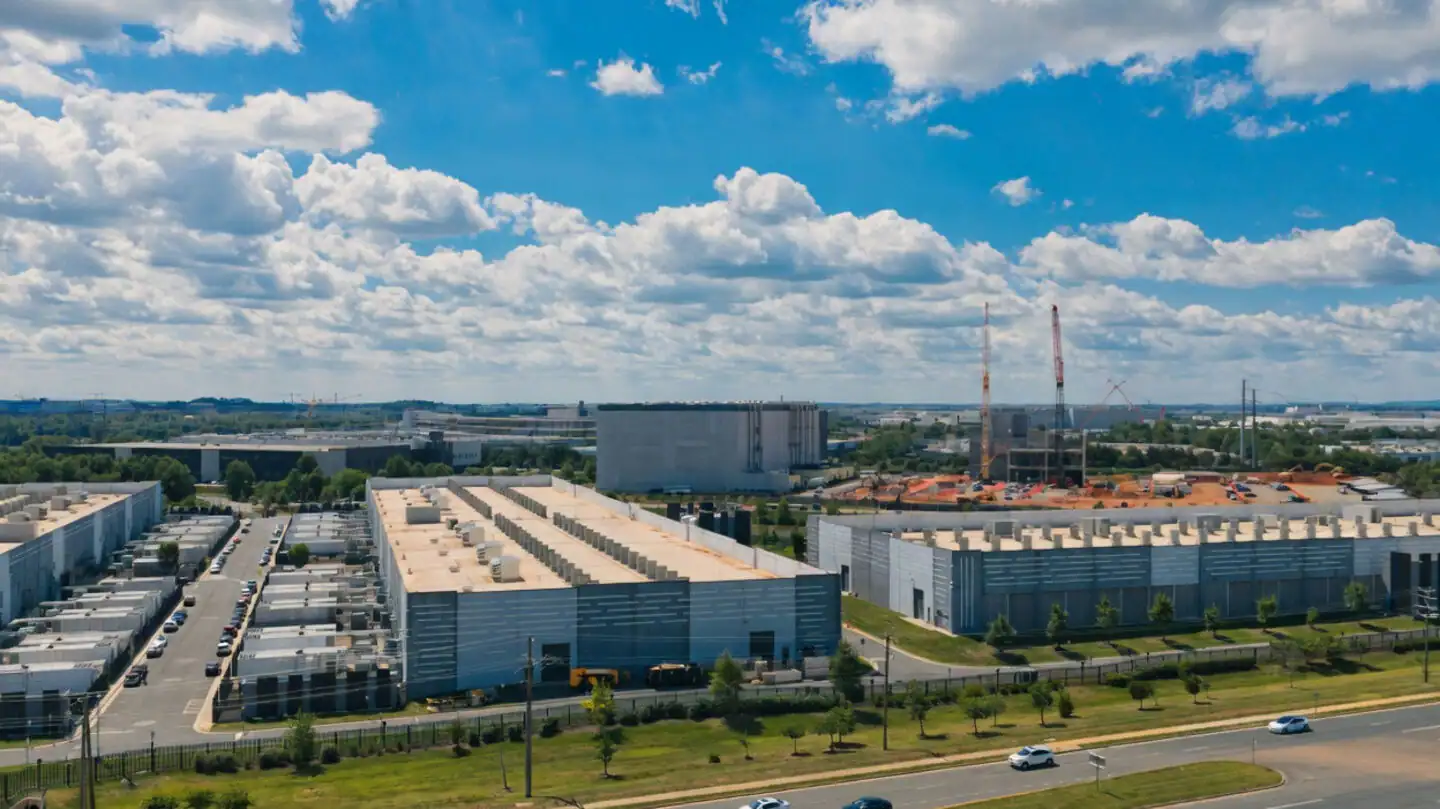
A rapid rise for an infrastructure startup
Crusoe, a company that builds and operates data centers specifically designed to support AI computing workloads, has reached a valuation of thirty billion dollars in its latest funding round, marking one of the more striking valuation jumps among companies positioned in the physical infrastructure layer of the AI industry. The company's rise illustrates how investor enthusiasm for the AI boom has increasingly extended beyond model developers themselves to the specialized real estate, power and cooling infrastructure required to actually train and run large-scale AI systems.
Crusoe's business model has focused on developing data centers in locations with access to relatively low-cost or otherwise underutilized power sources, an approach the company says allows it to offer more competitive pricing to AI labs and cloud providers than facilities built in more traditional data center hubs where power availability has become increasingly constrained. That strategy has positioned the company as an attractive partner for AI labs racing to secure computing capacity amid an industry-wide infrastructure crunch.
Why investors are betting big
Venture investors involved in the latest funding round pointed to surging demand for AI training capacity as the primary driver behind the valuation increase, noting that data center capacity has become one of the most significant bottlenecks constraining how quickly AI labs can train and deploy increasingly large models. With major AI companies signing multi-year, multi-billion-dollar computing capacity agreements, infrastructure providers capable of delivering that capacity quickly and reliably have become unusually valuable in the current market environment.
Analysts note that the AI infrastructure buildout has increasingly resembled a capital-intensive arms race, with companies across the industry racing to secure land, power agreements and construction capacity years in advance of actual anticipated demand. That dynamic has created significant opportunities for well-capitalized infrastructure specialists like Crusoe, but it has also raised questions among some investors about whether the pace of data center construction could eventually outstrip actual long-term demand if AI adoption growth slows from its current trajectory.
Broader implications for the AI buildout
The funding round adds to a broader pattern of enormous capital flows into AI infrastructure companies this year, spanning chipmakers, data center developers, power generation partnerships and specialized cooling technology providers, all benefiting from what industry participants describe as an unprecedented buildout cycle. Some economists have begun drawing comparisons to prior infrastructure booms, cautioning that heavy capital investment cycles of this scale have historically been followed by periods of consolidation once initial demand projections are tested against reality.
For now, Crusoe says it plans to use the new funding to accelerate construction of several already-planned data center campuses and to expand its power procurement partnerships, positioning the company to compete for a growing pipeline of large-scale AI computing contracts. Industry watchers say the coming year will be a critical test of whether infrastructure valuations at this scale can be sustained as more capacity comes online across the sector.
A crowded field of infrastructure bets
Crusoe's valuation jump comes as a growing number of specialized AI infrastructure companies compete for a similar pool of investor capital and customer contracts, ranging from established data center real estate investment trusts expanding into AI-specific facilities to newer entrants focused exclusively on power procurement or advanced cooling systems needed for increasingly dense computing clusters. Investors say picking winners in this crowded field has become one of the more challenging exercises in venture capital given how quickly the underlying technology and customer requirements continue to evolve.
Company leadership has said Crusoe intends to differentiate itself through its focus on flexible, lower-cost power sourcing strategies rather than competing purely on scale with better-capitalized rivals, a positioning it believes will remain valuable even if overall AI infrastructure spending growth eventually moderates from its current exceptional pace. Whether that strategy proves durable is likely to become clearer over the next several quarters as more of the company's planned facilities move from construction into full operation.