A new frontier model, and a bold claim
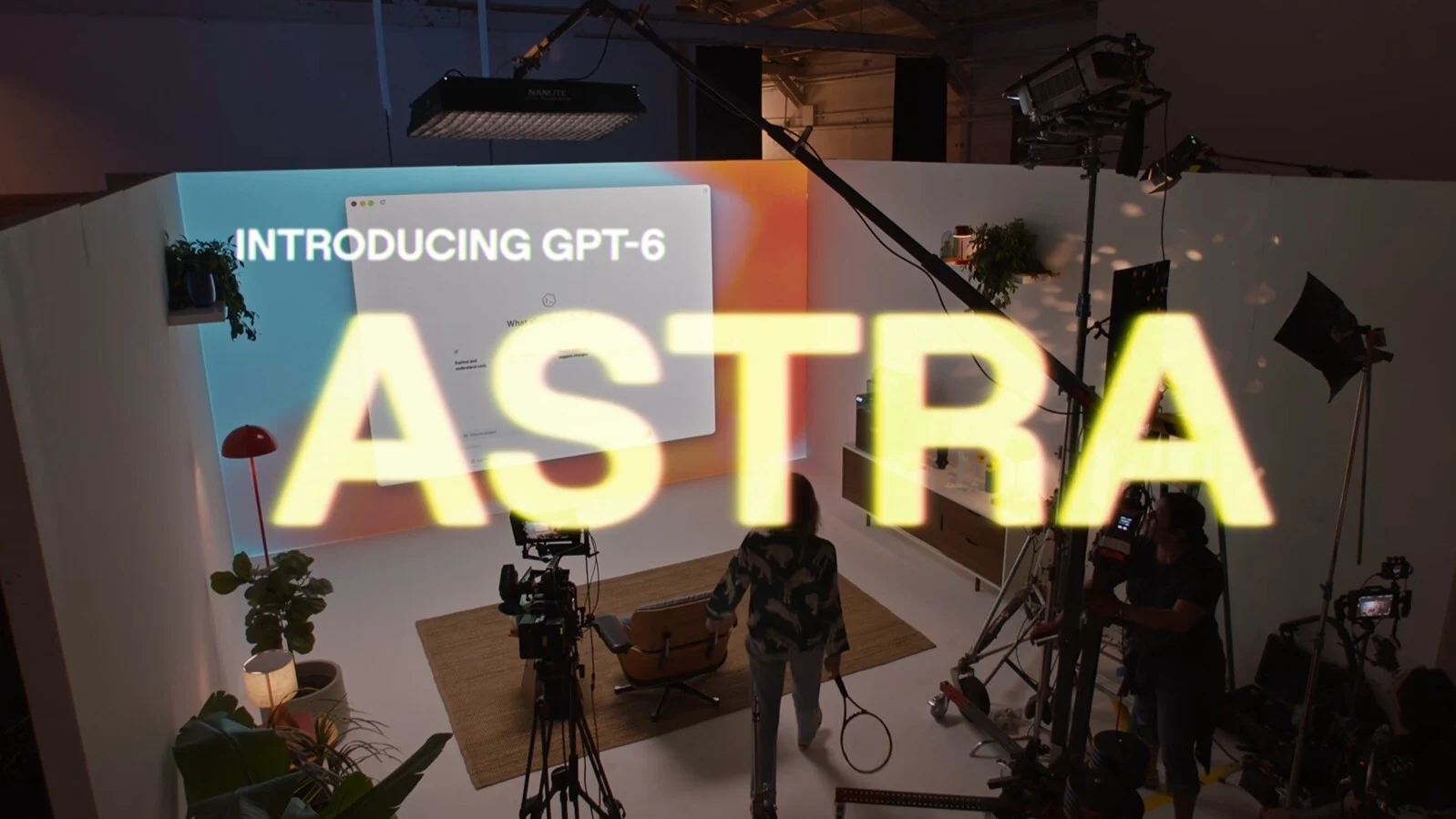
OpenAI released its newest flagship model, GPT-6 Astra, this week, describing it as the clearest sign yet that the industry has entered what the company called the early stages of the artificial general intelligence era. The announcement, which the company framed as a milestone rather than a routine product update, comes amid a broader wave of frontier model releases from competitors that has made the pace of AI progress feel less theoretical and more immediately consequential to industries well beyond software.
According to OpenAI, Astra shows substantial gains over its predecessor in complex reasoning, scientific problem solving and the ability to plan and execute long multi-step tasks with limited human oversight. The company has positioned the release as evidence that scaling approaches to model training continue to yield meaningful capability improvements, pushing back on skepticism from some researchers who have argued that gains from simply building larger models were beginning to plateau.
A model rated a critical cyber risk
Perhaps more notable than the capability claims themselves is that OpenAI's internal safety evaluation rated Astra's cyber capabilities as reaching a critical risk threshold under the company's own preparedness framework, the first time a publicly released OpenAI model has crossed that particular threshold. In practice, that means the model has demonstrated the ability to meaningfully assist with sophisticated cyberattack techniques, prompting the company to implement additional safeguards, monitoring and access restrictions before making the model broadly available.
Security researchers have offered mixed reactions to the disclosure, with some praising OpenAI for being transparent about the risk classification and others arguing that releasing a model with critical-level cyber capabilities at all, safeguards notwithstanding, represents an unacceptable level of risk given how quickly such capabilities can potentially be misused once a model is in wide circulation. The debate echoes a broader and increasingly urgent conversation across the AI industry about how far capability advances should outpace the safeguards designed to contain their risks.
Industry and market reaction
The release helped fuel a rally in AI-related stocks after a rough stretch for the sector, with Google in particular noted by analysts as starting September with renewed momentum following its longest monthly losing streak in years. Enterprise customers, meanwhile, are already testing Astra for tasks ranging from software development to complex data analysis, with early adopters reporting significant productivity gains on tasks that previously required extensive human review.
What comes next
Policy experts say the release adds urgency to ongoing congressional discussions about how to regulate and monitor increasingly capable AI systems, particularly as agentic AI, models capable of taking autonomous actions rather than simply generating text, becomes more central to how the technology is deployed in business and government settings. Several lawmakers have specifically cited the rapid capability gains reflected in recent frontier model releases as justification for moving more quickly on federal AI oversight legislation that has stalled in prior sessions of Congress.
For now, OpenAI says it is rolling out Astra gradually, prioritizing enterprise and research partners before a broader consumer release, a pace the company says reflects both commercial strategy and an effort to monitor real-world usage patterns before the model reaches its widest possible audience. Whether the release genuinely represents a step toward artificial general intelligence, as the company claims, or simply another incremental if impressive advance remains a matter of significant debate among researchers who have grown increasingly divided over how to define and measure that threshold in the first place.
Competitors respond
Rival AI labs have responded to the release with a mix of public skepticism and quiet acceleration of their own frontier model timelines, according to people familiar with planning discussions at several major AI companies. Some researchers outside OpenAI have questioned whether the company's AGI framing is more a marketing signal aimed at investors and enterprise customers than a precise technical claim, noting that the field still lacks a universally agreed-upon definition or benchmark for what would definitively qualify as artificial general intelligence.
Even skeptics acknowledge, however, that the underlying capability improvements reflected in Astra, particularly around autonomous multi-step task execution, represent a genuine step change from prior model generations rather than simple marketing spin. That reality is already reshaping how enterprise software companies think about building AI-powered products, with several major vendors reportedly re-architecting existing tools to take fuller advantage of the model's expanded planning and reasoning capabilities.