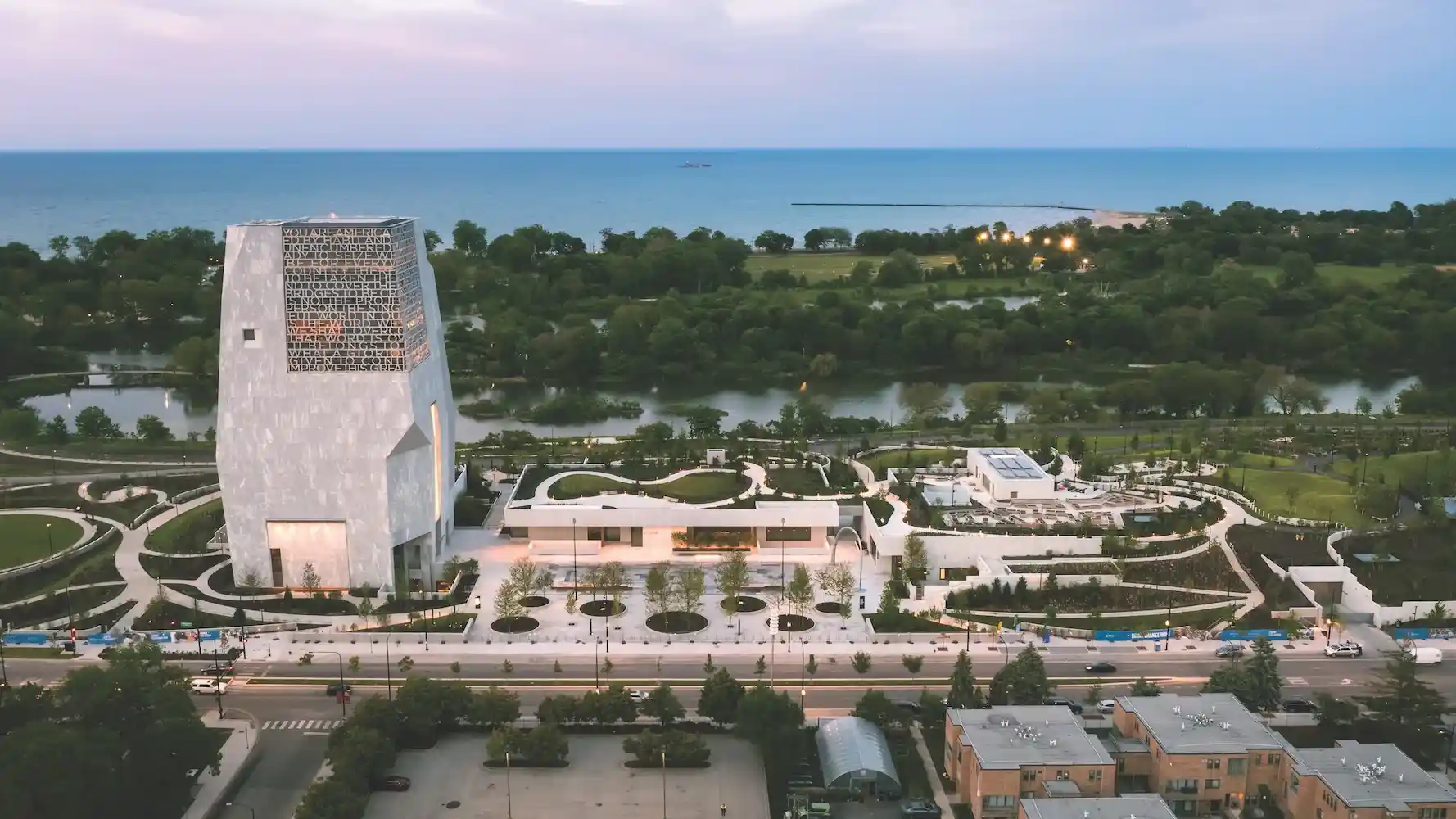
A long-awaited landmark
More than a decade after it was first announced, the Obama Presidential Center has opened its doors on Chicago's South Side, becoming a permanent cultural fixture in the Hyde Park and Jackson Park neighborhoods where former President Barack Obama built much of his early career. The campus, free and open to the public, includes a museum requiring timed tickets, a branch of the Chicago Public Library, gardens, event space and athletic facilities designed to serve both visitors and the surrounding community.
The center's grand opening drew a genuinely star-studded crowd, with former Presidents Bill Clinton, George W. Bush and Joe Biden, along with their spouses, joining Barack and Michelle Obama for a dedication ceremony in Jackson Park. Notably, sitting President Donald Trump was not in attendance, marking what observers described as the first time a sitting president skipped the opening of a facility of this kind, though he was referenced throughout the event without being named directly.
So much of what I hold most dear I owe to the people of this city and the people of the surrounding neighborhoods, former President Obama told the crowd gathered for the dedication.
More than a traditional library
Unlike earlier presidential libraries, the Obama Presidential Center is designed as the first fully digital library of its kind, meaning official records and archival materials are housed off site while the physical campus focuses on public engagement, exhibitions and community programming. Museum visitors can explore all four levels of exhibits, including a recreated Oval Office and a rooftop Sky Room offering sweeping views across Chicago's West and South Sides.
The center also offers free admission days for Illinois residents each week, part of a broader effort by the Obama Foundation to ensure the campus functions as a genuine community resource rather than simply a tourist attraction. Foundation leaders, including CEO Valerie Jarrett, have described the project as intended to celebrate what they call the power of ordinary people coming together to accomplish extraordinary things, a theme reflected throughout the museum's exhibits.
An emotional homecoming
During the dedication ceremony, Michelle Obama delivered an emotional tribute to her husband, reflecting on their shared history, their daughters and what she described as his unshakeable moral fiber, a moment that visibly moved the former president. Performances from a lineup that included Bruce Springsteen, Stevie Wonder, John Legend and U2's Bono and The Edge added to what many attendees described as one of the more memorable civic celebrations Chicago has hosted in years.
In the weeks since opening, the center has continued to draw steady crowds, with tickets to the museum frequently selling out months in advance. City officials and neighborhood advocates say the project has already begun generating measurable economic activity for the South Side, an area that has long sought exactly the kind of sustained investment and foot traffic the center was designed to bring.
A lasting legacy project
For Obama, who has said he first arrived in Chicago in 1985 knowing almost no one in the city, the center represents something closer to a homecoming than a traditional postpresidential project. With the campus now fully open and drawing visitors from across the country, city leaders say its long-term impact on the surrounding community will likely become one of the more closely watched urban development stories in Chicago for years to come.
City planners say the center's ripple effects are already visible in surrounding commercial corridors, where several long-vacant storefronts have reopened in anticipation of sustained visitor traffic. Community organizations that pushed for years to secure local hiring commitments during construction say they are now focused on ensuring the center's ongoing operations, from museum staffing to grounds maintenance, continue to prioritize South Side residents, viewing that follow-through as just as important to the project's legacy as the building itself.