Liftoff after years of anticipation
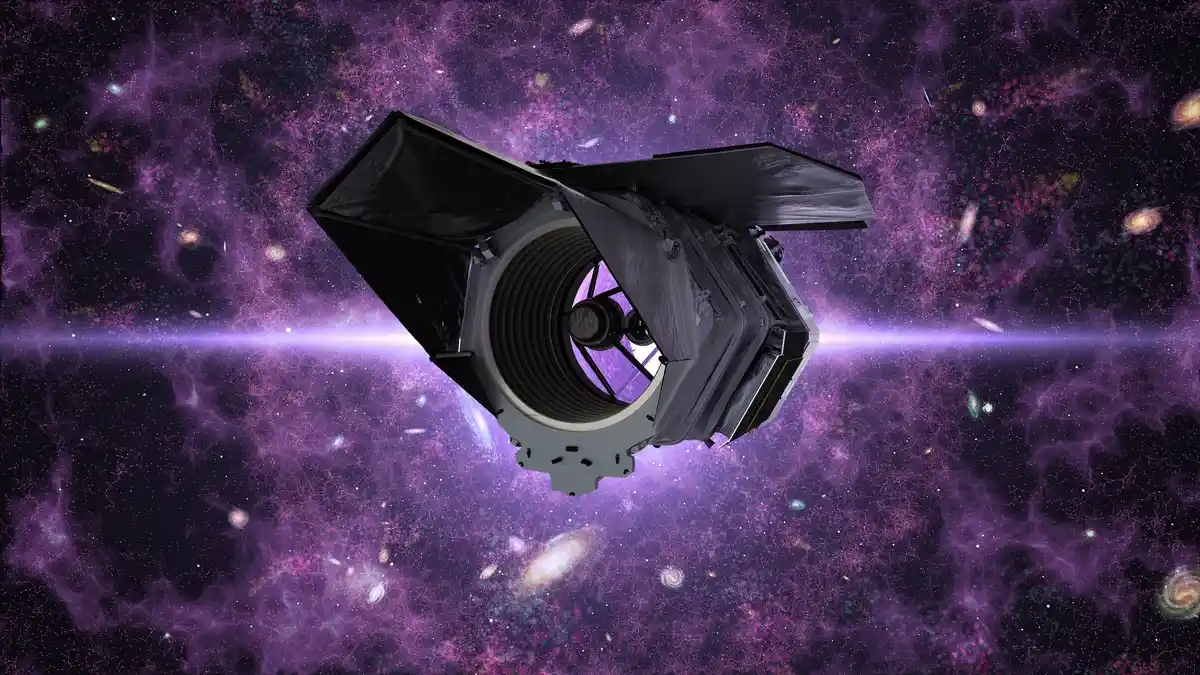
NASA's newest flagship observatory left Earth on Sunday morning, launching aboard a SpaceX Falcon Heavy rocket from Launch Complex 39A at Kennedy Space Center in Florida. The Nancy Grace Roman Space Telescope, named after the agency's first chief astronomer, is now beginning a three month, roughly one million mile journey toward its final orbital position, where it will spend years studying some of the most fundamental unanswered questions in physics.
The mission had been in development for more than a decade, and NASA officials noted with evident pride that it launched nine months ahead of its original schedule and within its planned budget, a rarity for a project of this scale and complexity. Once in position, Roman will orbit a gravitationally stable point roughly a million miles from Earth known as the second Sun-Earth Lagrange point, the same general region already occupied by the James Webb Space Telescope.
Roman is exactly the kind of success story we want to see across NASA, said NASA Administrator Jared Isaacman.
A camera built to see the whole picture
What sets Roman apart from earlier space telescopes is less about how deeply it can peer into the cosmos and more about how much of the sky it can capture at once. Its primary instrument, the Wide Field Instrument, is essentially a 300 megapixel infrared camera built from eighteen individual detectors, each roughly the size of a saltine cracker. That wide field of view allows Roman to survey vast swaths of sky far more quickly than previous observatories.
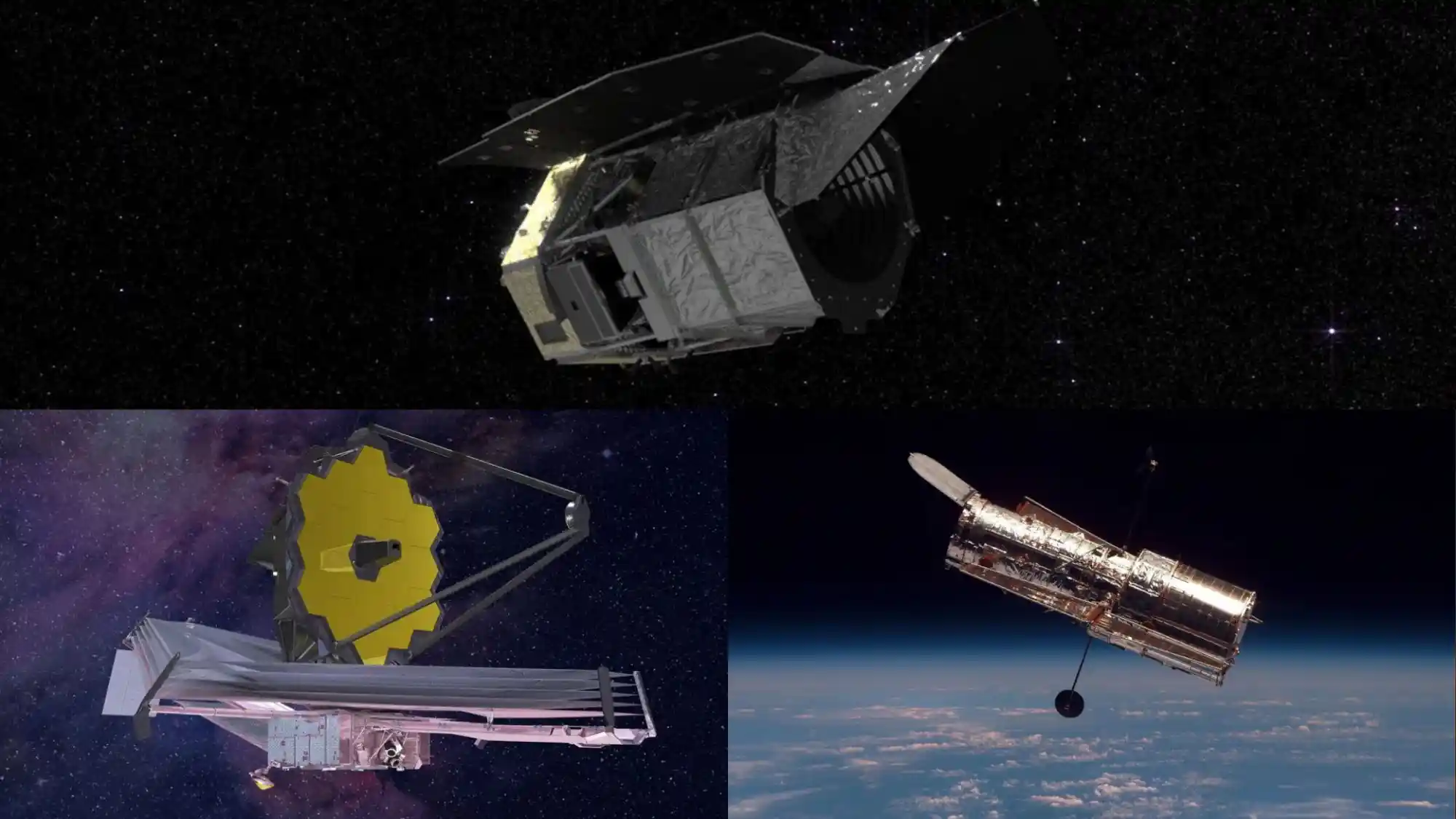
NASA scientists say that speed will let Roman scan the universe roughly a thousand times faster than the Hubble Space Telescope, enabling a kind of wide, statistical astronomy that has simply not been possible before. Rather than focusing on a single distant object for weeks at a time, Roman will be able to survey billions of galaxies and hundreds of millions of individual stars over the course of its mission.
Dark matter, dark energy, and distant worlds
Roman's science goals center on some of astronomy's biggest open questions, chief among them the nature of dark matter and dark energy, the mysterious forces believed to make up the vast majority of the universe's mass and energy but which remain almost entirely unexplained. By mapping the large scale structure of the cosmos in extraordinary detail, scientists hope Roman will help narrow down competing theories about how the universe has expanded over billions of years.
The telescope is also expected to conduct a sweeping statistical census of planetary systems beyond our own, with NASA projecting that Roman's surveys could ultimately uncover around 100,000 new exoplanets, a substantial increase over the total number currently known. Researchers say the sheer scale of that dataset could reshape scientists' understanding of how common, or rare, planetary systems like our own actually are across the galaxy.
What happens next
For the next few months, mission teams will focus on commissioning Roman's systems, carefully checking and calibrating its instruments before science operations formally begin. NASA has said it expects to release the telescope's first images by early 2027, a milestone that scientists and space enthusiasts alike are already anticipating as the moment Roman's true capabilities come into public view for the first time.
Scientific teams around the world are already preparing proposals for how they might use Roman's data once it becomes available, with several university-led consortiums forming specifically to analyze the telescope's exoplanet survey results. NASA has also opened its Adopt a Pixel public engagement campaign, allowing members of the public to symbolically claim one of Roman's 300 million imaging pixels, part of a broader effort to build public enthusiasm for a mission whose most dramatic scientific results are still years away from being fully realized.