A flu season that is moving fast
The U.S. flu season has gotten off to a very early start, and it is picking up speed. In its latest weekly update, posted Friday, the Centers for Disease Control and Prevention said seven states reported high flu activity last week, up from just two the week before. More than 3% of visits to doctors' offices last week were for flu-like illness, a sign that the season is truly underway.
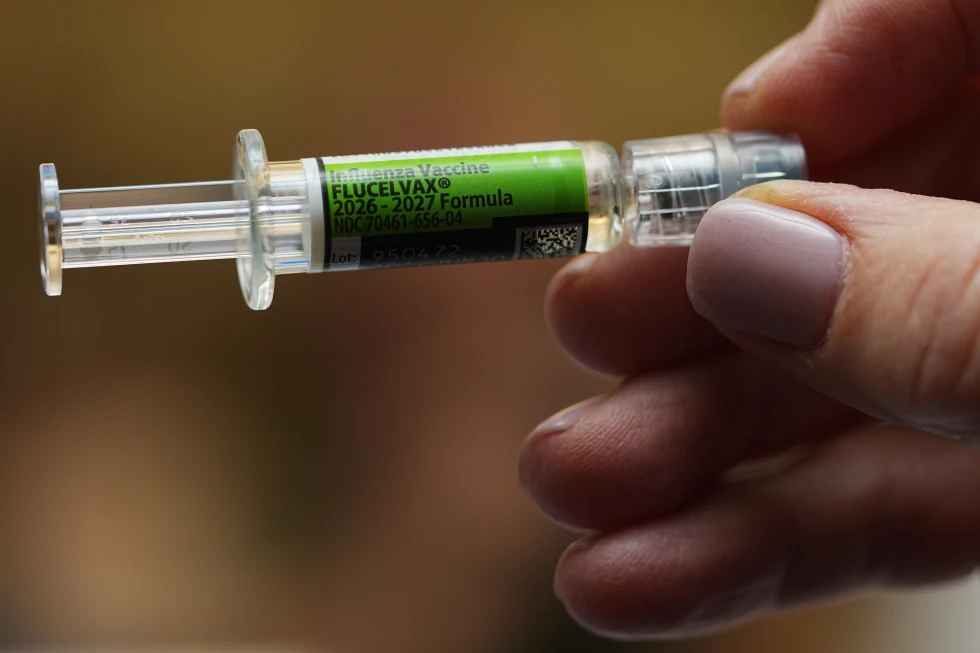
Louisiana is seeing the worst of it so far. Dr. Fred Lopez, an infectious diseases specialist at the LSU Health Sciences Center in New Orleans, said flu season "is taking off," and in a direction that is likely to get worse over the next month or two. "If you haven't been vaccinated, you should get vaccinated now," he said.
Where it is spreading and how bad it is
The surge began in the South and West. According to the CDC, the states with high flu activity so far are California, Louisiana, Oregon, South Carolina, Tennessee, Texas and Washington.
It is not unusual for Louisiana to be among the first states hit each year. Lopez said that is at least partly because of low vaccination rates, high poverty rates and the difficulty many people have getting health care.
The CDC estimates that at least 2.6 million illnesses, 36,000 hospitalizations and 2,100 deaths so far this season are tied to flu infections. Early activity is higher than usual for this point in the year, the agency noted, but it is not clear that this means the season will be worse than others.
There is one worrying sign. Dr. Anna Durbin of Johns Hopkins University said at a recent media briefing that the flu hospitalization rate in mid-October was the highest seen that early in an autumn in more than 15 years.
Thanksgiving travel and gatherings
Doctors expect flu and other respiratory viruses to spread faster as people travel and gather later this month for Thanksgiving. Dr. Nicole Iovine, an infectious disease specialist affiliated with the University of Florida, said in an emailed statement this week that getting vaccinated is especially important as families prepare to get together for the holidays.
Who should get a flu shot, and when
Lopez said people should not get vaccinated while they have significant symptoms, because their immune system is busy fighting the illness. But he said people should still get a flu shot even if they already had an infection this fall. The vaccine protects against three kinds of flu virus, and it is not unusual for more than one strain to circulate in a season.
Last winter's season as a comparison
Last winter's flu season surged in late December, and infections were especially intense in some parts of the country. New York City health officials called it the most intense season in 20 years at the time. It faded over the following months and was basically over by late March.
Even so, the CDC estimated that at least 32 million illnesses, 380,000 hospitalizations and 24,000 deaths occurred that season. That total is a reminder of how much a heavy flu season can cost.
What is circulating, and will the vaccine work?
Most of this fall's illnesses so far are caused by a version of an A H1N1 flu virus with mutations that could let it slip past the immune system's defenses more easily. Even so, early data suggest the current vaccine "can recognize" the circulating virus and should work against it, said Andrew Pekosz, an immunology expert at Johns Hopkins University, at a recent media briefing.
Health officials will not know for months exactly how effective this year's vaccine is. For now, Pekosz said, "there is no cause for concern."
What to watch next
The next CDC updates will show whether the number of high-activity states keeps climbing and whether the surge spreads beyond the South and West. With Thanksgiving gatherings ahead and health experts urging vaccination, the coming weeks will show how steep this early start becomes.